☎ (719) 600-2752
★★★★★ Fixing Pikes Peak Region Ceilings Since 2009

Colorado Springs Ceiling Repair.

We repair cracked, water-damaged, and sagging ceilings across Colorado Springs, texture matched so the fix disappears. Workmanship guaranteed, zero mess left behind.

  • Free Fast Estimates
  • We Fix Drywall, Popcorn and Plaster Ceilings
  • Ceiling Repair Contractors for 15+ Years
Why Call Us First

Why Colorado Springs Homeowners Choose Us for Ceiling Repair

1

Ceiling Repair Specialists, Not Just Handymen

Overhead work gets complicated: compound wants to fall, patches sag before they set, and every window in the room shows the flaws. Because we remove popcorn ceilings all over the Springs, our crew spends most of its week taping, skimming, and texturing ceilings. That's the experience you want when the problem is over your head.

2

Ceiling Texture Matching That Holds Up Under Colorado Sun

With 240+ sunny days a year, our light rakes across ceilings and turns every ridge into a shadow. This is why texture matching is included in every ceiling repair we quote. We test it on a sample board, feather wide, and check the finished blend with a light held flat to the ceiling before we call it done.

3

Insured Ceiling Contractor With Firm Quotes & Zero Mess

You'll get a firm written price before we start, and that's the price you pay. We cover your floors and furniture before the first cut, clean up completely when we're done, and back every repair with a written warranty. And if your ceiling needs something we don't do, we'll tell you upfront.

If Water Is Coming Through Right Now

Ceiling Leaking? What to Do in the First 30 Minutes

Don't worry about the ceiling yet. First stop the water and protect your stuff. Here's what to do, in order:

  1. Shut off the water main. If the leak is under a bathroom, laundry room, or water heater, turn off the water to the whole house. In most Colorado Springs homes, the main shutoff valve is in the basement or crawlspace on the wall facing the street, often near the water heater. Turn the handle clockwise until it stops. If the leak started after a deep freeze, it's probably a burst pipe, and shutting off the main is the most important thing you can do.
  2. Leak from the roof? Catch it and call a roofer. You can't shut off a roof leak from a hailstorm or spring snowmelt. Put buckets under the drips and call a roofer about an emergency tarp.
  3. Turn off the power at the breaker if water is near a light, ceiling fan, or smoke detector. Flip the breaker for that room, and don't touch wall switches with wet hands.
  4. Protect your floors and furniture. Move furniture, rugs, and electronics out from under the leak. Put down towels and a bucket.
  5. Drain a bulging ceiling safely. If the ceiling is sagging like a water balloon, hold a bucket under the lowest point, stand off to the side, and poke a small hole with a screwdriver. A slow, steady drain is much safer than letting the whole section come down. The hole is easy to patch later.
  6. Take photos for insurance. Before you clean anything up, take photos and video of the ceiling, the stain, and anything that got wet. Hail leaks and burst pipes are often covered, and your adjuster will want to see the damage.
  7. Get the leak fixed, then call us for the ceiling. Call a plumber for pipes and fixtures, or a roofer for storm and snowmelt leaks. Once the water is stopped, call us. We'll check that everything is dry, then repair the ceiling and match the texture.

Being straight with you: If there's standing water in the house or a ceiling has already come down, call a water restoration company first to dry the structure. We'll handle the rebuild once it's dry, and we're happy to tell you which situation you're in if you call (719) 600-2752.

What We Fix

Ceiling Repair Services in Colorado Springs

Drywall, popcorn, knockdown, plaster, or vaulted. If it's over your head and it's damaged, we can fix it.

◍

Water Damaged Ceiling Repair

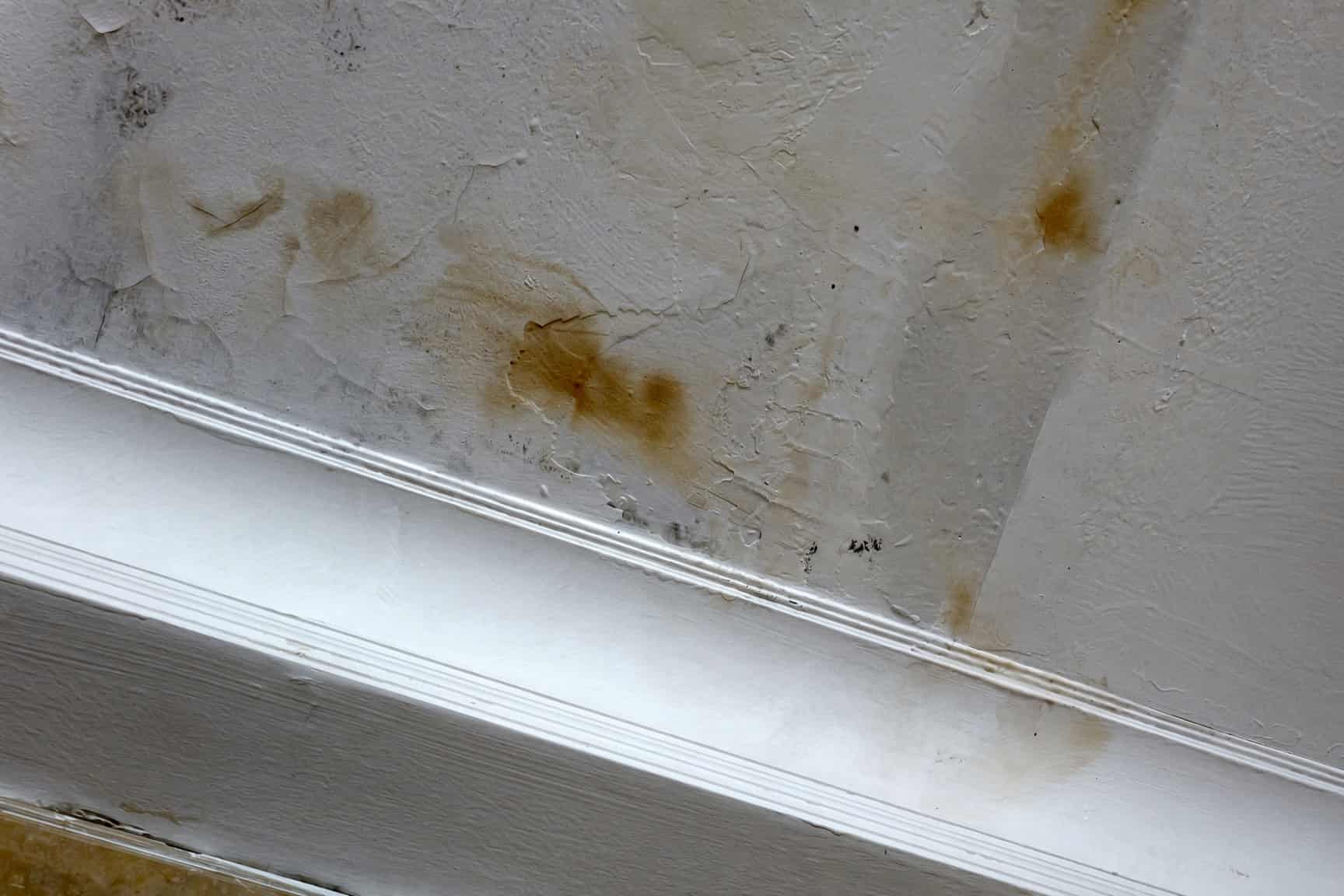
Brown water stain on a bedroom ceiling in a Colorado Springs home before repair

Hail-damaged roofs, spring ice dams, and pipes that burst are the most common reasons Colorado Springs ceilings get wet. Once the leak is fixed, we check the drywall and framing with a moisture meter, replace anything soaked, and only close it up when it's truly dry. That's how you avoid a stain coming back or mold growing where you can't see it.

  • Hail leaks, ice dams, burst pipes, and upstairs bathroom leaks
  • Wet insulation pulled and replaced, not left to dry in place
  • Photos and an itemized scope for your insurance adjuster
⚡

Ceiling Crack & Nail Pop Repair

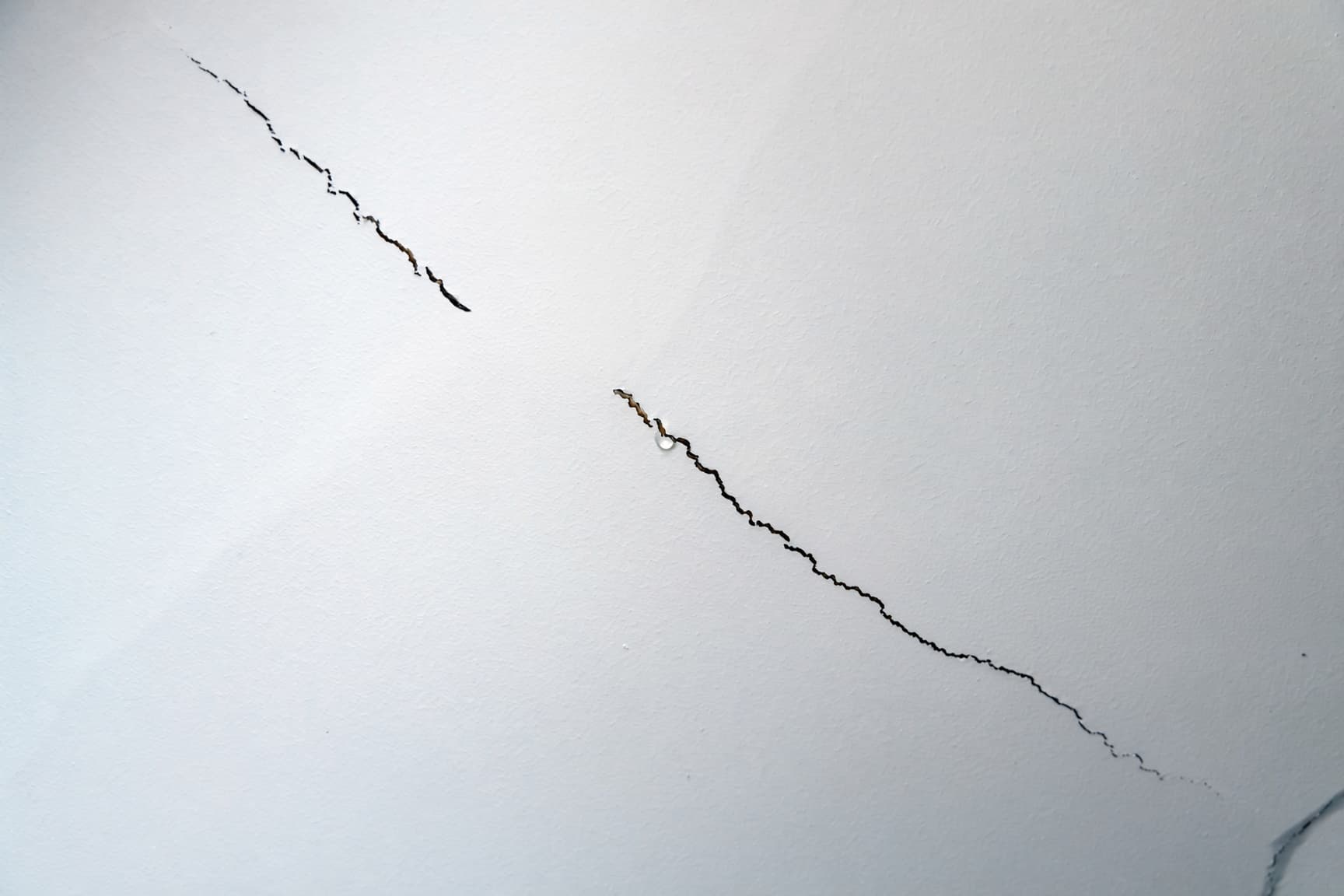
Long crack running along a drywall ceiling seam in a Colorado Springs home

Most ceiling cracks in Colorado Springs come from our dry air, shifting clay soil, or cold winters. The good news: they're rarely serious. Before we fix anything, we find out what caused your crack, because that's what decides the right repair. Fixing the cause is why our repairs don't come back next season.

  • Seam cracks re-taped properly, not just filled and painted over
  • Winter gaps where the ceiling meets the wall fixed so they stay closed
  • Every nail pop in the house fixed in one visit
▢

Ceiling Hole Repair & Patching

Most ceiling holes we fix were left by another trade: a plumber tracking down a leak, an electrician running wire, or an HVAC tech reaching a duct. Others come from an old light fixture, ceiling fan, or recessed light being moved. We put solid backing behind every patch so it won't sag or crack later, then match the texture so you can't tell where the hole was.

  • Holes from plumbers, electricians, and HVAC work patched flush
  • Old fixture, fan, and recessed light holes closed up
  • Several patches done in one visit to save you money
⌒

Sagging Ceiling Repair

Many Colorado Springs homes have thin ceiling drywall under heavy blown-in insulation, and over time it starts to droop. A ceiling holding water from a previous leak sags faster and is more urgent. If the drywall is still solid, we screw it back up tight. If it's damaged, we replace it with stiffer, sag-resistant board.

  • Same-day response when the sag is from a leak
  • Sound drywall re-secured with screws and ceiling washers
  • Failed sections replaced with 5/8" or sag-resistant board
✦

Ceiling Texture Matching & Retexturing

A ceiling repair is only invisible if the texture matches, and Colorado's bright, low winter sun shows every mismatch. We practice your texture on a sample board first, matching how it looks today after years of paint, not how it looked new. If we think a spot repair won't blend in, we'll tell you at the estimate and quote retexturing the whole ceiling, so there are no surprises once the work starts.

  • We handle all ceiling texture types: knockdown, popcorn, stomp, orange peel, smooth
  • Checked under angled light before we call it done
  • More in our ceiling texture guide below
⌂

Vaulted & High Ceiling Repair

Many homes in Briargate, Flying Horse, and Black Forest have vaulted great rooms, two-story entryways, or open stairwells. A lot of contractors avoid these ceilings or charge extra once they see the height. We have the scaffolding to reach them safely, and the cost of setting it up is included in your quote from the start.

  • We repair cracks, stains, and holes on ceilings up to 20 feet high.
  • Your floors, stairs, and railings stay covered and protected.
  • Any extra cost for height is in your quote upfront, and it won't change once we start.
▣

Garage, Porch & Wood Ceiling Repair

If there's a bedroom or bonus room over your garage, that ceiling is a fire barrier required by building code. When a frozen pipe or a plumber damages it, it has to be repaired with fire-rated drywall, and a lot of quick patch jobs miss that. We do it right the first time, so it passes a home inspection when you sell. We also repair porch ceilings and soffits damaged by hail and ice, and wood ceilings in Black Forest and Woodland Park homes.

  • We repair garage ceilings with the fire-rated drywall code requires.
  • We fix porch ceilings and soffits after hail and ice damage.
  • We blend wood and log ceilings cleanly into the drywall around them.
♨

Bathroom Ceiling Repair

Bathroom ceilings take a beating from daily shower steam. That's what causes peeling paint, small mold spots, and soft drywall around the fan. Most quick fixes just repaint, and the problem is back within a year. We replace damaged drywall with moisture-resistant board and use paint made for bathrooms. If your exhaust fan is too weak or vents into the attic, we'll tell you at the estimate, so the repair actually lasts.

  • We fix peeling and bubbling bathroom ceilings for good, not just repaint them.
  • We use moisture-resistant drywall where steam and water hit hardest.
  • We point out fan and venting problems before any work starts.
▤

Ceiling Drywall Replacement

You might not need a whole new ceiling. In most cases we can replace just the damaged section and blend it in so well you'd never know, for a fraction of the cost. When a ceiling really is past saving, like when it's soaked through, sagging across the room, or covered in years of old patches, we replace it cleanly and finish it to match the rest of your home.

  • We replace just the damaged section or the full ceiling, whichever your home actually needs.
  • We seal off the room to control dust and haul away all the debris.
  • We handle Colorado's asbestos testing for you when it's required.
🏛

Plaster Ceiling Repair

Older homes in the Old North End, Patty Jewett, Old Colorado City, and Manitou Springs often still have original plaster ceilings. Plaster needs a different approach than drywall, or the cracks come right back. We reattach loose plaster to the wood behind it, repair cracks to handle old-house movement, and save your original ceiling whenever we can.

  • Loose and sagging plaster reattached, not torn out
  • Cracks repaired so they don't reopen next winter
  • Clean, flush plaster-to-drywall transitions
⁘

Popcorn Ceiling Patch Repair

Popcorn ceilings are what we're known for in Colorado Springs, so patching one is everyday work for us. We blend new texture into the old and match the color, so the patch doesn't stand out whiter than the rest. If the damage is widespread, we'll price a patch and a full popcorn ceiling removal side by side, so you can choose.

  • Popcorn patches blended to match texture and color
  • Colorado asbestos testing coordinated when required
  • Patch vs. removal quoted honestly, side by side
✚

Rental, PCS & Condo Ceiling Repair

We help landlords turning rentals, military families with PCS deadlines from Fort Carson, Peterson, and Schriever, and condo owners dealing with a leak from upstairs. We handle everything in as few visits as possible, provide paperwork for HOAs and insurance, and send photos when it's done, which helps if you've already moved.

  • Move-out and pre-listing ceiling repairs on your timeline
  • Condo and townhome leak repairs documented for HOAs
  • Office and commercial ceilings repaired after hours
What Your Ceiling Is Telling You

Common Ceiling Problems in Colorado Springs Homes (and What Causes Them)

Good news: most ceiling problems we see have a known, local cause and a straightforward fix. Here's how to tell what you've got and how much you should worry.

Fix the source first

Brown Water Stain on the Ceiling

A brown or yellow ring means water reached your ceiling at some point. In Colorado Springs, the usual causes are a roof damaged by hail, ice dams after a heavy spring snow, a pipe that froze in a cold snap, or a leak from an upstairs bathroom. Our guide to what causes ceiling water stains explains each one and how to tell them apart.

Once the leak is fixed, we check the drywall with a moisture meter. If it's dry and firm, we seal the stain so it can't bleed through, then refinish it. If it's gone soft, we replace that section. Either way, you'll know which one you need before we start.

Seasonal, not structural

Crack Where the Ceiling Meets the Wall (Truss Uplift)

If a gap opens where your ceiling meets an interior wall every winter, then closes up again by summer, it's called truss uplift. Cold weather makes your roof framing bow upward slightly, and it lifts the ceiling with it. It's very common in Briargate, Stetson Hills, Rockrimmon, and Pine Creek homes built from the '80s on.

It looks alarming, but it's not a structural problem. Caulk and filler crack again because the ceiling keeps rising and falling with the seasons. We fix it by letting the corner move freely instead of fighting the movement, often with trim attached only to the ceiling so it slides along the wall. The gap stays covered all year, even when the ceiling lifts again next winter.

Don't wait on this one

Sagging Drywall Ceiling

A sagging ceiling usually has one of three causes, and you can often tell which from the floor:

  • Stained, damp, or bulging: it's holding water from a leak. This is the urgent one.
  • Wavy between the framing, no stain: heavy attic insulation is pulling the drywall down over time.
  • A line of popped nails, or it moves when pushed: the drywall is pulling loose from its fasteners.

If it's wet, keep everyone out from under it, put a bucket below, and call us the same day. The other two aren't emergencies, but they only get worse, so it's worth fixing before the drywall cracks or tears. See what causes a sagging ceiling and how it's fixed.

Worth a closer look

Spiderweb and Diagonal Cracks in the Ceiling

Cracks spreading out from one spot, or running diagonally across the room, usually come from the house shifting slightly. Colorado Springs sits on a lot of clay soil that swells and shrinks with the seasons, and that movement shows up in ceilings too. Most of these cracks are minor, and we can fix them.

For thin cracks that aren't growing, we open them up, reinforce them with tape so they can handle a little movement, then blend the texture so they disappear. If a crack is wider than about 1/8 inch, keeps getting longer, or shows up with sagging or sticking doors, have a structural engineer look first. Once they've cleared it or the cause is fixed, we'll repair the ceiling. We'd rather send you to the right person first than sell you a patch that won't hold.

Find the moisture

Peeling or Bubbling Paint on the Ceiling

Peeling paint is a sign that moisture is getting to your ceiling. Where it's happening usually tells you why:

  • In the bathroom: shower steam isn't getting out. The exhaust fan is too weak, missing, or vents into the attic.
  • In other rooms: water is getting in from above, often a small roof or plumbing leak.
  • On a popcorn ceiling: the texture was painted with the wrong product and is pulling loose.

Repainting over it just peels again. To get you results that last, we scrape off the loose paint, seal the surface with the right primer, and refinish. If a fan or a leak is the real cause, we'll point it out at the estimate, so you only pay for this repair once.

Needs the right method

Cracked or Sagging Plaster Ceiling

Many older homes in the Old North End, Patty Jewett, Old Colorado City, Ivywild, and Manitou Springs still have original plaster ceilings. Not sure if yours is plaster? Knock on it. Plaster sounds solid, like stone, while drywall sounds hollow.

Plaster grips thin wood strips behind it. When that grip breaks, the plaster loosens, cracks spread, and sections start to sag. Press gently near a crack: if it gives or feels spongy, it's loose. That's why surface patches on plaster keep failing. We reattach the loose plaster first, then repair the cracks so they don't reopen. We save your original ceiling whenever we can, and when a section is too far gone, we replace it with drywall that sits perfectly flush with the plaster around it.

Usually cosmetic

Ceiling Seam Cracks and Peeling Drywall Tape

Long, straight cracks across the ceiling are usually the seams between drywall sheets opening up. An easy way to tell: they run in straight lines, often about four feet apart, and sometimes you can see paper tape bubbling or peeling along them. The tape came loose because Colorado's dry air shrank the wood framing, or the original crew didn't use enough compound underneath.

That's why caulk or paint over the crack only lasts a few months: the loose tape is still underneath. We cut out the loose tape, re-tape the seam with a stronger compound made for our dry climate, and blend the texture. With the seam rebuilt, the crack doesn't come back next winter.

Cosmetic

Nail Pops in the Ceiling

Nail pops look like small round bumps or circular cracks, usually lined up in straight rows where the drywall is attached to the framing. They're very common a year or two after move-in in newer neighborhoods like Wolf Ranch, Banning Lewis Ranch, Meridian Ranch, and Lorson Ranch. As the new wood framing dries out in our dry air, it shrinks, the nails loosen, and the weight of attic insulation pushes them out.

They're harmless, but pushing them back in or painting over them doesn't last. If your home is still under the builder warranty, check that first, since many builders cover it. After that, we add a screw next to each pop so the drywall is held tight and can't move again, then patch and texture so it disappears. Most homes have them in several rooms, so we fix them all in one visit to keep the cost down.

Quick fix

Hole in the Ceiling

Most ceiling holes we see were left by another trade: a plumber tracking down a leak, an electrician running wire, or an HVAC tech reaching a duct. Others come from an old ceiling fan, light fixture, or recessed light that was moved or removed.

We put solid backing behind every patch so it won't sag or crack later, then match the texture so you can't tell the hole was ever there.

Cosmetic

Popcorn Ceiling Falling Off

Popcorn texture crumbles when it gets wet or bumped, and a can of spray popcorn from the hardware store almost never matches.

The good news is that popcorn ceilings are our specialty. We can patch yours so it blends in, or quote full popcorn removal side by side so you can choose. See Colorado's asbestos rules below.

Not sure which one you have? Call (719) 600-2752. We can usually tell you what it is, how urgent it is, and a rough price before anyone drives out.

A Quick Gut Check

How Serious Is Your Ceiling Damage?

Almost every ceiling call we get in Colorado Springs falls into one of three groups. Here's how to tell which one you're in, and what to do next.

Act Today

Emergency Ceiling Repair: Leaks, Bulges & Sudden Sagging

  • Ceiling bulging or holding water
  • Active dripping after a hailstorm, snowmelt, or hard freeze
  • A sag you can see from across the room
  • Water near a light fixture, ceiling fan, or smoke detector

Stop the water, turn off the breaker if fixtures are involved, and keep everyone out from under it. Our leaking ceiling checklist walks you through it step by step. Then call a plumber or roofer to stop the leak, and call us once it's dry.

Schedule Soon

Ceiling Damage to Fix Soon, Before It Gets Expensive

  • A dry brown stain left over from hail season
  • Ice dam stains along the edge of the ceiling
  • Seam cracks that reopen every winter
  • Peeling bathroom ceiling paint or a slow sag

None of these are emergencies, but they cost more the longer you wait. A stain that's a $300 seal-and-refinish today can become a full section replacement once the next storm finds the same weak spot. Fixing them between seasons is the cheapest time to do it.

Cosmetic

Cosmetic Ceiling Repairs That Can Wait

  • Hairline cracks that never get bigger
  • A few nail pops in a newer east-side home
  • An old patch you can still see
  • A winter gap where the ceiling meets the wall

These are issues you can fix when convenient. You can also bundle several into one visit to keep the cost down. If your home is less than a year old, check your builder warranty first.

Hail, Snow, Frost & Plumbing

Water Stain on the Ceiling? Common Causes of Ceiling Leaks in Colorado Springs

Repairing the ceiling is the easy part. Finding where the water came from is what keeps you from paying for the same repair twice.

What's Causing Your Ceiling Water Stain?
Likely CauseWhen It Shows UpWhat You'll NoticeWho Fixes the Leak
Hail-damaged roofThe most common cause hereMay through August. The stain often shows up with the next rain, sometimes weeks after the hailstorm.A stain on a top-floor ceiling that grows after each stormA roofer, usually through your homeowners insurance
Ice dams & snowmeltFebruary through April, after heavy, wet spring snow. Worst in Monument, Black Forest, and Woodmoor.Stains along the edge of the ceiling near an outside wall, sometimes with peeling paint in the cornerA roofer, plus better attic insulation and ventilation
Attic frost ("attic rain")A sunny, warm day right after a hard cold snapSmall scattered spots or drips, often near the bath fan, attic hatch, or recessed lightsAn insulation or HVAC contractor to seal air leaks and vent the bath fan outside
Upstairs bathroomAny time of year, worse after showers or flushingA ring directly under a tub, shower, or toilet that may come and goA plumber for pipe or drain leaks. If it's just worn caulk around the tub, we can reseal it while we're there to fix the ceiling.
Swamp cooler on the roofSummer, or the first warm spell if it wasn't winterizedA stain near the cooler vent, common in older ranches in Knob Hill, Palmer Park, and Security-WidefieldA cooler service tech or roofer to reseal it
Frozen or burst pipeJanuary and February deep freezesSudden heavy dripping after a thaw, often in a garage ceiling under a bonus room or near an outside wallA plumber, right away
AC drain line or attic furnaceSummer, when the AC is runningA stain near the furnace or along the path of the drain lineAn HVAC technician

How to Tell Where a Ceiling Leak Is Coming From

Under an upstairs bathroom: watch when the stain gets darker. If it's after a shower, the shower pan or drain is likely leaking. If it's after a bath or a flush, check the tub drain or the seal under the toilet. Call a plumber first.

On a top floor, after rain or snow: the water is coming through the roof. If the stain is near a chimney, skylight, or vent pipe, ask your roofer to check the flashing, the metal that seals around those openings.

Along an outside wall in winter, with no clear ring: a gray, blotchy shadow that shows up on cold days usually isn't a leak. It's condensation where the attic insulation is thin or missing. Adding insulation fixes the cause, and then the ceiling just needs to be sealed and repainted.

Small spots after a cold snap: this is often frost in the attic melting, usually because a bathroom fan blows moist air into the attic instead of outside. Here's an easy test: turn on the fan and hold a square of toilet paper against the vent. If the fan can't hold it in place, it's too weak to clear shower steam, and your ceiling will keep taking the hit.

How Long Does a Wet Ceiling Need to Dry Before Repair?

A small stain that was only damp for a few hours often dries in a day or two. A ceiling that held water, or has wet insulation sitting on top of it, takes longer, and soaked insulation should be pulled out, not left to dry. Our dry Colorado air helps, but we don't guess. We check the drywall and framing with a moisture meter and only close up the ceiling when we confirm it's dry. Sealing a ceiling that's still wet inside is how stains come back and mold starts growing where you can't see it.

Can You Paint Over a Water Stain on the Ceiling?

Not with regular paint. Water stains bleed right through latex, sometimes within a day. The stain has to be sealed first with a stain-blocking primer, then painted. On popcorn or knockdown ceilings, that primer has to go on carefully so it doesn't soften the texture, which is where a lot of DIY fixes go wrong. And if the drywall under the stain is soft or crumbly, no primer will save it. That section needs to be replaced, and we'll tell you which situation you're in before we start.

Mold on the Ceiling After a Leak: When to Worry

A few small dark spots on a bathroom ceiling are usually surface mildew from steam, and they clean up easily. Mold that spreads beyond a water stain, a musty smell, or mold on the back of the drywall once it's opened up is a bigger job. If we open a ceiling and find more than a small patch, we'll stop and show you, then refer you to a mold remediation company. We won't cover it up and close the ceiling.

Filing a hail claim? Photograph every ceiling stain and mention it to your adjuster right away. Interior damage from a covered roof leak is often paid on the same claim, but only if it's documented. We provide photos and an itemized repair estimate your adjuster can easily follow, which helps your claim move faster.

When It's Urgent

Sagging Ceiling Repair: Is It Dangerous and How Is It Fixed?

A sagging ceiling is the one ceiling problem we never tell people to wait on. How dangerous it is depends on what's causing it.

Ceiling Sagging From Water Damage

If the ceiling is bulging, stained, soft, or dripping, it's holding water. Wet drywall loses its strength quickly, and a section can drop without warning. Keep people and pets out from under it, drain the water using our leaking ceiling checklist, get the leak fixed, and call us. Once it's dry, we cut out the soaked drywall, replace any wet insulation, and rebuild the ceiling.

Ceiling Sagging From Insulation Weight

A ceiling that has slowly gone wavy between the framing, with no stain, is usually carrying too much weight. Many Colorado Springs homes have thinner 1/2" drywall on ceiling framing spaced 24 inches apart, and over the years heavy blown-in insulation pulls it down. We see it more and more as homeowners add attic insulation to cut winter heating bills.

This kind of sag isn't an emergency, but it won't fix itself, and it's cheaper to fix before the drywall cracks or the seams tear. Here's what we recommend:

  • Plan to fix it within the next month or two. Most of the time the drywall can be screwed back up and reinforced instead of replaced, but only if it hasn't stretched or cracked yet.
  • Take a photo now and check it every couple of weeks. Compare the two to see if it's getting worse.
  • Don't add more insulation above it until the ceiling is fixed. If you're planning an insulation upgrade, have us reinforce the ceiling first.
  • Call us right away if anything changes: the sag gets deeper, a crack or stain appears, or you hear creaking or popping from the ceiling.

Ceiling Sagging From Popped Nails or Screws

Sometimes the drywall itself is fine, but the nails or screws holding it up have pulled loose. You'll usually see a line of small bumps or popped nails, and the ceiling may move slightly if you press on it. It's common in newer east-side homes as the framing dries out, and in older homes where the original nails have loosened over the years.

This is usually the easiest kind of sag to fix, as long as it's caught early. Here's what we recommend:

  • Plan to fix it within the next month or two. While the drywall is still in good shape, we can screw it back up tight without replacing anything.
  • Don't push the nails back in or paint over them. They'll just pop out again, and pressing on a loose ceiling can crack the drywall.
  • If your home is less than a year old, check your builder warranty first. Many builders cover this.
  • Call us sooner if the sag gets deeper, a crack opens along the line of nails, or a section starts pulling away from the framing.

How We Fix a Sagging Ceiling

  • Re-secure it: if the drywall is dry and solid, we lift it back tight to the framing and fasten it with screws and wide ceiling washers so it can't pull loose again.
  • Add support: where the framing is spaced wide, we add strips of wood across it so the drywall has more to hold onto.
  • Replace it: if the drywall is water-damaged or permanently bent, we replace it with thicker 5/8" or sag-resistant ceiling drywall, made for exactly this problem.

When it's not a drywall problem: if the sag comes with cracked or bowed framing in the attic, a crack wider than about 1/8 inch, or doors nearby starting to stick, the framing itself may be the issue. We'll tell you to have a structural engineer or framer look first, before we hang a single sheet of drywall.

Know What's Over Your Head

Drywall or Plaster Ceiling? How to Tell, and Why It Matters

Before anyone quotes a ceiling repair, they should know what the ceiling is made of. Plaster and drywall fail differently and have to be repaired differently. Three quick checks:

Check the build year. Most Colorado Springs homes built after the mid-1950s have drywall ceilings. Homes from before about 1940 in the Old North End, Patty Jewett, Old Colorado City, Ivywild, and Manitou Springs usually have plaster over wood lath. In between, it can go either way, and plenty of older homes have both after decades of remodels.

Knock on it. Drywall sounds hollow and slightly papery between the framing. Plaster sounds dense and solid, like knocking on stone.

Look at the cracks. Drywall cracks run in straight lines along hidden seams. Plaster cracks wander and branch, often in a web of fine connected lines.

Why Plaster Ceiling Repair Is Different

Drywall is a sheet screwed to the framing. When it fails, we re-fasten it or cut out the bad section and tie in new board. Plaster is troweled onto wood lath and holds on by "keys" that squeeze through the gaps. When those keys break, the plaster sags. Treating it like drywall, with rigid filler in a moving crack or new drywall screwed over loose plaster, is why so many old-house ceiling repairs crack right back out. We re-anchor plaster to the lath first and save the original ceiling whenever it's worth saving.

Ceiling Texture Types in Colorado Springs Homes

Every texture takes a different technique to match, and getting it right is what makes a repair disappear. Here's what we see most around town, and how we match each one:

Knockdown is the most common ceiling texture in Colorado Springs, especially in '90s and newer homes on the north and east sides. It's sprayed on, then flattened with a wide knife. Our dry air makes it set fast, so timing is everything. We test it on a sample board first, adjusting until the pattern matches yours, before it ever touches your ceiling.

Popcorn covers a lot of ceilings built before the 1990s. A patch has to match both the texture and the color, since old popcorn yellows over time and new texture looks bright white next to it. We blend both, so the patch doesn't stand out. Popcorn ceilings are our specialty, so this is everyday work for us.

Stomp and slap brush show up on many '70s and '80s ceilings. There's no machine setting for these, so we match them by hand, the slow way, studying your pattern until the repair blends in.

Orange peel is mostly a wall texture here, but it turns up on ceilings now and then. We match it by adjusting our sprayer until the bumps are the same size as yours.

Smooth ceilings are what remodels and newer custom homes want, and they're the hardest to repair, because there's no pattern to hide anything in. To do this properly, we apply extra thin coats and check every inch under bright, angled light until there's nothing left to see.

If we think a spot repair won't blend in perfectly, we'll tell you at the estimate and give you the option to retexture the whole ceiling. We'd rather be upfront than leave you with a patch you notice every time you walk into the room.

How to Make a Ceiling Patch Invisible

Even with a perfect texture match, a ceiling patch can still give itself away. It usually happens in one of three ways, and we take care of each one:

  • A visible bump or outline. If the patch is built up too thick or the edges aren't blended out wide enough, it casts a faint shadow. We spread each coat several inches past the repair so it sits perfectly flat with the ceiling around it.
  • A dull or shiny spot after painting. Bare patching compound soaks up paint differently than the rest of the ceiling. We prime every repair first so the paint finishes evenly.
  • Paint that doesn't quite match. Ceiling paint fades and yellows over the years, so even the same color can look off as a touch-up. We'll usually suggest painting the full ceiling, corner to corner, for a seamless finish.

Our last step is to sweep a bright light across the repair at a low angle, the way the winter sun hits a west-facing room in the afternoon. If the patch passes that test, you won't notice it in everyday light. For more on matching walls as well as ceilings, see our drywall texture matching guide.

Save Yourself a Wasted Service Call

Who Do I Call to Fix My Ceiling?

Many ceiling problems need two calls: one to stop the cause, and one to repair the ceiling. Here's who to call, and in what order.

What You're SeeingWho to Call, in Order
Crack, nail pops, or a small holeCall a drywall contractor (us). This is a ceiling-only repair, so there's no one else to line up.
Gap where the ceiling meets the wall every winterCall a drywall contractor. It's truss uplift, a seasonal movement in the roof framing that's common in Colorado Springs two-stories. It's not a structural problem, so you don't need an engineer.
Stain after a hailstorm, rain, or snowmelt1. Call a roofer, and ask about an emergency tarp if it's still leaking. 2. Call your insurance company if it was hail, since interior damage is often covered on the same claim. 3. Call a drywall contractor once the roof is fixed and the ceiling is dry.
Stain under a bathroom, or dripping right now1. Shut off the water and call a plumber to find and fix the leak. 2. Call a drywall contractor once the leak is fixed and the ceiling has dried out.
Water after a hard freeze1. Shut off the main and call a plumber right away. This is usually a burst pipe, often in a garage ceiling or an outside wall. 2. Call a drywall contractor to rebuild once it's repaired and dry.
Standing water, or the ceiling already came down1. Call a water restoration company to remove the water and dry out the house with fans and dehumidifiers. 2. Call a drywall contractor to rebuild the ceiling once everything is dry.
Water near a light fixture or ceiling fan1. Turn off the breaker for that room. 2. Call an electrician if water got inside the fixture or electrical box. 3. Call a drywall contractor to repair the ceiling.
Sagging with wide, growing cracks or sticking doors1. Call a structural engineer to check the framing. Shifting clay soil makes this worth ruling out here. 2. Call a framer if repairs are needed. 3. Call a drywall contractor to finish the ceiling.
Peeling bathroom ceiling1. Call a drywall contractor to repair and refinish the ceiling. 2. Call an electrician or HVAC tech only if the exhaust fan needs to be replaced or vented outside. We'll tell you if it does.
Damaged popcorn ceiling over a large area1. Call a popcorn ceiling contractor (us). We coordinate the asbestos testing Colorado requires before more than 32 sq ft is disturbed. 2. An abatement crew is only needed if the test comes back positive, and we schedule them for you.

Do Roofers Do Ceiling Repairs?

Usually not. Roofers fix the roof itself: shingles, flashing, and the decking underneath. Very few have drywall finishers on staff, and the ones who include interior repairs on an insurance job typically hire it out.

After a storm, the right order is: the roofer fixes the roof, the ceiling dries out, then a drywall contractor repairs the ceiling. If you're filing a claim, ask your adjuster to list the ceiling repair as its own line item, so the money is set aside for it.

Should I Hire a Handyman or a Drywall Contractor to Fix My Ceiling?

A handyman is a fine choice for a couple of small nail holes on a smooth ceiling. For anything textured, water-damaged, larger than your hand, or a crack that keeps coming back, a drywall contractor is worth it. Ceilings catch light from every window in the room, so they show rushed work more than any wall in your house.

Handymen in Colorado Springs typically charge about $45 to $85 an hour, and ceiling repairs often take more than one visit while compound dries between coats. We price by the job instead, so you know the full cost upfront, and extra drying time or a second coat never adds to your bill.

2026 Colorado Springs Pricing

How Much Does Ceiling Repair Cost in Colorado Springs?

Most ceiling repairs in Colorado Springs cost between $150 and $900. Water damage, sagging sections, and full replacements cost more. These price ranges include labor and materials, texture matching, primer, and cleanup.

Small Patch or Crack
$150–$450

Holes, nail pops, seam cracks

Water Stain
$200–$500

Drywall still firm, sealed & refinished

Water Damage
$450–$1,500+

Damaged section cut out & replaced

Full Room Ceiling
$1,200–$2,800

About 12'×12', tear-out & replace

Ceiling Repair Costs in Colorado Springs (2026)
RepairTypical CostWhat's Included
Nail popsOne room, done in one visit$150–$350Each pop screwed down tight, patched, textured, and primed. Common in newer homes in Banning Lewis Ranch, Wolf Ranch, and Falcon once the builder warranty ends.
Small ceiling holeUp to about 8"$150–$350Hole cut clean, backed with wood, taped, finished, and texture matched. Covers old light fixture boxes and small plumber or electrician access holes.
Large ceiling holeUp to about 4 sq ft, e.g. plumber or leak access$300–$650New drywall attached to the framing, blended out wide, and textured. Insulation above is moved and put back.
Seam or settling crackPer crack$175–$450Loose tape cut out and the seam re-taped with a compound suited to our dry climate. Longer cracks or several in one room land toward the top.
Truss uplift repairWinter gap where ceiling meets wall$300–$750Corner rebuilt so it can move with the seasons, or trim added that hides the gap. Common in Briargate, Stetson Hills, and Rockrimmon two-stories.
Water stainDrywall still firm$200–$500Moisture checked, stain sealed with stain-blocking primer, texture touched up, and the area repainted. A common call after hail season.
Water damaged section replacedAfter the leak is fixed$450–$1,500+Wet drywall and insulation removed, framing checked dry, new drywall hung, finished, and matched. The size of the wet area sets the price. Usually from hail leaks, ice dams, or January burst pipes.
Sagging ceiling re-secured$400–$1,200Drywall lifted back into place and fastened with screws and ceiling washers, extra support added where needed, then refinished.
Sagging section replaced$800–$2,500+Damaged drywall removed and replaced with thicker 5/8" or sag-resistant board, which handles heavy attic insulation much better.
Bathroom ceiling repairPeeling paint, mold spots, soft drywall$300–$900Failing paint removed, small surface mold treated, soft drywall replaced with moisture-resistant board, finished with bathroom-rated primer and paint. Fan problems pointed out.
Garage ceiling repairFire-rated drywall where required$250–$800Plumber cuts, frozen pipe damage, and sagging repaired, with fire-rated drywall under bonus rooms and bedrooms. Finished to garage level unless you want more.
Porch, soffit, or wood ceilingWood boards, exterior texture$300–$1,000+Damaged boards or panels replaced and finished to blend, using exterior-rated materials. Usually hail or ice damage. Priced once we see how far it goes.
Popcorn ceiling patch$250–$650New popcorn blended into the old texture and color. Asbestos testing ($250–$500) is added only if Colorado rules require it for the size of the repair.
Plaster ceiling repair$350–$1,500+Loose plaster reattached, cracks repaired, damaged sections rebuilt flush. Common in the Old North End, Old Colorado City, and Manitou Springs.
Full ceiling replacementAbout 12'×12' room$1,200–$2,800Tear-out with dust containment, haul-away, new drywall, finish, and texture. Small rooms cost more per square foot because setup and cleanup are about the same for any size room. Larger rooms usually come in at a lower per-foot rate.
High or vaulted ceiling access+$100–$400Scaffolding or extra equipment for ceilings over about 10 feet, common in Briargate, Flying Horse, and Black Forest homes.

Prices include labor, materials, texture matching, and primer. Finish paint is quoted separately.

What Affects Ceiling Repair Cost?

  • Ceiling height. The same repair costs more over a two-story entryway than in a bedroom, because it takes scaffolding to reach safely.
  • Your ceiling texture. Knockdown and orange peel are quick to match. Popcorn that's been painted, hand-applied textures, and perfectly smooth ceilings take more time to blend.
  • What's above the ceiling. With an attic above, we can often work from both sides. With a finished room above, everything is done from below, which takes longer.
  • How far the water spread. A stain often hides a bigger wet area. We check it with a moisture meter and show you what we find before doing any extra work, so there are no surprise charges.
  • Painting. Ceiling paint yellows over time, so a touch-up spot can stand out. Painting the whole ceiling usually gives the cleanest result, and we'll quote it both ways.
  • Doing several repairs at once. Three repairs in one visit cost much less than three separate trips.

How Much Should It Cost to Repair a Ceiling? Red Flags to Watch For

A fair quote tells you exactly what's being fixed, how the texture will be matched, and whether primer, paint, and cleanup are included. A low price can end up costing more if the repair fails. Be cautious if a contractor:

  • Gives you a single number with no details on what's included
  • Wants to patch over a water stain without checking whether it's dry
  • Says a crack that opens every winter just needs caulk

Our quotes spell everything out in writing, so you know exactly what you're paying for.

Does Homeowners Insurance Cover Ceiling Repair?

Yes, it usually does if the damage was sudden: a roof leak after a hailstorm, a pipe that burst in a freeze, or a washing machine hose that broke. But usually not if it happened slowly: a small leak that dripped for months, seasonal cracks, or general wear. Every policy is different, so check with your agent if you're not sure. If you file a claim, we'll give you photos and a detailed written estimate that makes your adjuster's job easier.

Bundling tip: ceiling work batches well. Adding a second stain, a crack in the next room, or a list of wall repairs costs far less than booking each separately, since containment and setup are already done. Our Colorado Springs drywall repair crew handles walls, basements, garages and ceilings in the same visit.

Spend Only What You Need To

Repair or Replace a Ceiling? The Cheapest Ways to Fix

Repairing is almost always cheaper than replacing, and most damaged ceilings in Colorado Springs don't need to come down. Here's every option from least to most expensive.

OptionTypical CostBest ForGood to Know
Spot repair and touch-up$150–$500One or two cracks, holes, or a dry water stain on an otherwise solid ceilingOlder ceiling paint may not match a touch-up, so painting the whole ceiling often looks best
Seal and repaint the ceiling~$1–$2.50 / sq ftOld water stains or a yellowed ceiling that's still in good shapeCovers stains and dated paint, but won't fix cracks, sagging, or texture damage
Retexture with knockdown~$1–$2 / sq ftA ceiling with lots of old patches or a rough surface you want to hideKnockdown is the most common ceiling texture in Colorado Springs, so it blends with the rest of most homes
Skim coat to smooth~$1.25–$2.50 / sq ftA modern, smooth ceiling when the drywall underneath is solidOur bright, low winter sun shows every flaw on a smooth ceiling, so it needs extra coats to look right
Popcorn removal and new finish~$1.50–$3+ / sq ft plus finishA popcorn ceiling that's damaged, dated, or both, common in pre-1990s homesColorado requires asbestos testing first. See our popcorn removal cost guide
New drywall over the old ceiling~$2–$3.50 / sq ftOld plaster or popcorn ceiling you'd rather cover than remove, like in some Old North End homesAdds weight and lowers the ceiling slightly, so we check the framing first
Tear out and replace~$4–$8 / sq ftDrywall that's soaked, moldy, sagging across the room, or falling apartThe most expensive and messiest option. Small rooms cost more per foot, and asbestos testing applies over 32 sq ft

When to Repair a Ceiling

If the drywall is dry and firm, the damage is limited to a few spots, and the framing above is solid, a repair is the right call. That covers most of the cracks, holes, nail pops, and hail-season water stains we see around Colorado Springs, and it costs far less than replacing.

When to Replace a Ceiling

If the drywall soaked long enough to go soft or crumble, there's mold on the back side, it's sagging across most of the room, or it's been patched so many times it looks quilted, replacing it is usually smarter. When it's a close call, we'll quote both options so you can decide.

Straight Answers

Can I Repair a Ceiling Myself? A DIY Ceiling Repair Guide

Yes, some ceiling repairs are easy to do yourself. For example, a hairline crack on a smooth ceiling, a few nail pops, or a small hole is a good weekend project if you're patient. But DIY usually goes wrong in three places: matching texture, anything bigger than your hand, and anything that got wet.

Ceilings are harder than walls in ways people don't expect. Joint compound wants to fall off the knife, it sags if it goes on even a little too thick, and every coat happens with your arms over your head on a ladder. Then Colorado's low winter sun comes through the window and shows every ridge you missed.

How to Fix a Crack in a Drywall Ceiling

  1. Make sure it's not a seasonal crack. If it runs along the corner where the ceiling meets the wall and opens every winter, it's truss uplift, which is common in Colorado Springs two-stories. Filler won't hold it, because the ceiling keeps moving with the seasons. Skip the DIY on this one and give us a call. We can fix it so the gap stays hidden year-round.
  2. Protect the room. Put down drop cloths, move furniture out, and set up a sturdy ladder so you're not overreaching.
  3. Open up the crack. Use a utility knife to cut a shallow groove along the crack, and pull off any loose tape or paper.
  4. Tape over it. Press paper tape into a thin layer of joint compound over the crack. Use setting-type compound (the kind you mix from powder). Our dry air makes premixed compound shrink and crack, especially on ceilings.
  5. Spread it wide. Apply two or three thin coats, each a couple of inches wider than the last, and let each one harden before adding the next.
  6. Sand lightly, then check with a flashlight. Hold the light flat against the ceiling. The shadows show bumps you can't see looking straight up.
  7. Prime, add texture if needed, and paint. Skipping the primer leaves a dull patch that shows through the paint.

How to Patch a Hole in the Ceiling

For anything bigger than a nail hole, cut the damaged area into a clean square. Slide a strip of wood above the opening and screw it in place so the patch has something solid to attach to. Then screw in a piece of drywall cut to fit, tape the seams, spread a few thin coats of compound, sand, prime, and paint. That strip of wood is the step most people skip, and it's why so many ceiling patches sag or crack a few months later.

When to Call a Pro for Ceiling Repair

  • Textured ceilings. Spray cans of knockdown or popcorn rarely match, and you end up with an obvious circle overhead. Most Colorado Springs ceilings are textured, so this is where most DIY repairs fall short.
  • Anything wet or sagging. It needs a moisture check, and sometimes the insulation above needs replacing before the ceiling can be closed up.
  • Large repairs overhead. Holding a sheet of drywall over your head on a ladder is how people get hurt.
  • Popcorn or textured ceilings over 32 sq ft. Colorado requires a certified asbestos test before that much is disturbed, in homes of any age, and that applies to DIY too.
  • Garage ceilings under a bedroom. They're a fire barrier and have to be repaired with fire-rated drywall, or a home inspector will flag them when you sell.

Started a ceiling repair and it's not turning out right? Call (719) 600-2752 and we'll help you.

What to Expect

How To Repair a Damaged Ceiling: Our Step-by-Step Process

Whether it's one crack or a whole water-damaged ceiling, we follow the same steps: find the cause, fix it the right way, and leave a finish you can't spot once it's painted.

1

Free Ceiling Inspection & Estimate

We look at what's above the ceiling, check for moisture, and figure out whether the problem is the drywall, a leak, seasonal movement, or the framing. If it's something another trade needs to fix first, we'll tell you upfront.

2

Firm Written Quote

You get a written price that spells out the repair, the texture, and the primer. The price you approve is the price you pay, even if the job needs an extra visit for drying time.

3

Dust Containment & Attic Check

We cover floors and furniture, hang plastic, and seal your air vents so dust stays put. If there's an attic above, we check it too, looking for wet insulation and how far the water really spread.

4

Damaged Drywall Removal & Replacement

We cut out damaged drywall back to solid material, add support behind the repair, replace any wet insulation, and screw new drywall to the framing.

5

Taping, Mudding & Texture Matching

We tape the seams, apply thin coats of compound suited to our dry Colorado air, and sand with dust-collecting sanders. Then we match your texture on a sample board before it goes on your ceiling.

6

Priming, Painting & Final Walkthrough

We seal stains with stain-blocking primer and paint if you'd like. Then we check the repair under bright, angled light and walk through it with you before we call it done.

Before You Hire Anyone

How to Choose a Ceiling Repair Contractor in Colorado Springs: 5 Questions to Ask

Quotes for the same ceiling repair can vary a lot. These five questions help you see why, and you're welcome to ask us every one of them.

"Can you match my ceiling texture?" A good contractor will explain how. We test your texture on a sample board first and check the finished repair under bright, angled light. If their answer is a spray can, expect a patch you can see for years.

"How will you check for water damage?" Any water stain should be checked with a moisture meter before it's patched. Sealing a ceiling that's still wet inside means the stain, or mold, comes back. We check every water-damaged ceiling before closing it up.

"What's causing the crack, and will it come back?" Different cracks need different fixes. A winter gap where the ceiling meets the wall needs a corner that can move, and a seam crack needs new tape. If the plan is just caulk or filler, it'll likely be back next winter.

"What's included in the quote?" Ask about texture matching, primer, paint, floor protection, cleanup, and a written warranty. Two quotes that look far apart are often similar once everything is listed. Our written quotes spell it all out, so the price you approve is the price you pay.

"Are you licensed and insured?" Colorado has no statewide contractor license. In Colorado Springs and El Paso County, licensing goes through the Pikes Peak Regional Building Department, and it's required for any work that needs a permit. Most ceiling repairs don't, but every contractor should be able to show proof of liability insurance. We share ours with every quote.

Local Knowledge

Ceiling Repair Across Colorado Springs Neighborhoods

When and where your home was built says a lot about what's happening overhead. Here's what we see most in each part of town, and what to watch for in yours.

1880s–1940s

Plaster Ceilings in the Old North End, Patty Jewett, Old Colorado City & Manitou Springs

Many homes here still have their original plaster ceilings. Over the decades, they've often been patched or covered with a layer of drywall. Plaster sags and cracks when it loosens from the wood behind it, so we reattach it before repairing anything. That way the fix holds, and we can save your original ceiling whenever possible.

1950s–1970s

Popcorn Ceilings & Swamp Cooler Leaks in Knob Hill, Palmer Park, Village Seven, Cimarron Hills & Security-Widefield

Most ranch homes here have popcorn ceilings, and many have been painted over. Roof-mounted swamp coolers are also common, and a water ring near the cooler vent is one of the calls we get most. If your popcorn is damaged in several spots, we can quote popcorn removal as well, since it's sometimes the better value.

1980s–2000s

Winter Ceiling Cracks in Briargate, Rockrimmon, Stetson Hills, Pine Creek & Mountain Shadows

Many two-story and tri-level homes here get a gap between the ceiling and walls every winter. It's called truss uplift, and while it's harmless, filler won't keep it closed. We fix the corner so it can move with the seasons without showing. In Mountain Shadows, homes rebuilt after the 2012 Waldo Canyon fire often have different textures than their neighbors, so we match each home individually.

2005–Today

Nail Pops & Seam Cracks in Banning Lewis Ranch, Wolf Ranch, Meridian Ranch, Lorson Ranch & Falcon

Newer homes often get nail pops and seam cracks in the first year or two as the framing dries out. Check your builder warranty first, since many builders cover drywall repairs in year one. Once the warranty ends, we can fix every pop and crack in the house in a single visit.

Palmer Divide & Foothills

Ice Dam Stains in Monument, Woodmoor, Black Forest, Palmer Lake & Woodland Park

More snow and colder nights up here lead to more ice dams, which show up as stains along the edge of the ceiling after spring storms. Have a roofer fix the cause first, and then we'll repair the ceiling. We also work on the vaulted great rooms and wood or log ceilings common in these homes, and we're happy to make the drive.

Custom & Luxury

High & Vaulted Ceilings in Broadmoor, Cheyenne Mountain, Flying Horse & Kissing Camels

Homes here often have tall, curved, or coffered ceilings with hand-applied textures or perfectly smooth finishes. These surfaces show every flaw, so we match your texture on a sample board before we touch the ceiling. We also protect your floors and finishes from start to finish.

Condos & Townhomes

Leaks From Upstairs in Downtown, Northgate & Briargate Condos

In condos and townhomes, ceiling damage usually comes from a neighbor's plumbing. Start by notifying your HOA and your insurance company. We'll provide photos and a written estimate that your HOA and both insurers can work from, follow building rules on access and work hours, and leave your ceiling looking untouched.

Rentals & Military Housing

Rental Turnovers in Fountain, Security-Widefield & Near Fort Carson

Rentals often need ceiling repairs between tenants, such as bathroom stains, garage ceilings damaged in a freeze, or holes from moved light fixtures. We handle the whole list in as few visits as possible and work around move-in dates. For landlords and property managers who aren't local, we send photos when the work is done.

Colorado Rules, Plain English

Asbestos Testing & Permits for Ceiling Repair in Colorado Springs

Does My Ceiling Need Asbestos Testing Before Repair?

Usually not for small repairs. Colorado requires a certified asbestos inspection before more than 32 square feet of ceiling texture or drywall is disturbed, no matter how old your home is. Most patches and crack repairs are well under that, so they don't need testing.

Larger jobs, like replacing a water-damaged section or a whole ceiling, often do. Popcorn ceilings and older joint compound are the most likely to contain asbestos, especially in homes built before the 1980s. When testing is required, we schedule the certified inspector for you and wait for the results, which usually take a few business days, before any work starts. You won't have to track down an inspector or deal with the paperwork yourself. Learn more in our guide to asbestos testing for popcorn ceilings.

Do I Need a Permit to Repair a Ceiling?

For most ceiling repairs, no. Patching holes, fixing cracks, replacing a damaged section with the same type of drywall, retexturing, and painting all count as routine maintenance. A permit from the Pikes Peak Regional Building Department is usually only needed if the framing is being changed, new electrical is added (like recessed lights), or the repair is part of a bigger remodel. Not sure about your project? Tell us what's going on when you call, and we'll let you know if a permit is likely needed.

Why Homeowners Call Us for Ceilings

A Local Colorado Springs Ceiling Repair Company Since 2009

When you search for ceiling repair, many of the results are handymen who do a little of everything, or national sites that pass your call to whoever's available. We're a local crew, and ceilings are most of what we do every week. Between popcorn ceiling removal, skim coating, and repairs, we've seen what's behind nearly every crack and stain a Colorado Springs ceiling can have.

Why Our Ceiling Repairs Last

The difference is in the steps you don't see once the job is done. We use compound that holds up in our dry air, add solid backing behind every patch, check for moisture before closing anything up, and inspect the finish under bright, angled light, the same way the winter sun will hit it. Because we've worked in homes from the Old North End to Banning Lewis Ranch, we also know what to expect before we start, so your price doesn't change halfway through the job.

Ceiling Repair for Homeowners, Landlords, Military Families & HOAs

Most of our work is for homeowners. We also help landlords and property managers between tenants, military families on PCS deadlines, condo owners dealing with a leak from upstairs, and HOAs documenting water damage across a building. No matter who you are, you get a firm written price and the same crew from estimate to final walkthrough.

  • Free Same-Day Estimates
  • Firm Written Pricing
  • Written Workmanship Warranty
  • Zero Mess Guarantee
Written by Chris, Owner

I've been fixing ceilings around the Springs since 2009. Truss uplift in Briargate, water stains in Rockrimmon, plaster in the Old North End, nail pops in Banning Lewis Ranch. I'm usually the one who comes out to look at your ceiling and give you a price.

Not sure what you're looking at? Call me: ☎ (719) 600-2752

Need Ceiling Repair in Colorado Springs?

Free, fast estimates from a local crew that's been fixing ceilings across the Pikes Peak region since 2009.

Areas We Serve

Ceiling Repair Near Colorado Springs

We repair ceilings throughout Colorado Springs and the surrounding Pikes Peak region. Don't see your area? Call anyway.

Colorado Springs Briargate Rockrimmon Stetson Hills Pine Creek Northgate Old North End Old Colorado City Broadmoor Cheyenne Mountain Mountain Shadows Banning Lewis Ranch Wolf Ranch Flying Horse Cimarron Hills Security-Widefield Fountain Falcon Peyton Monument Black Forest Manitou Springs Woodland Park
Questions We Hear Every Week

Colorado Springs Ceiling Repair FAQs

Ceiling Repair Cost & Who to Call

Who do I call to fix a ceiling in Colorado Springs?

For cracks, holes, nail pops, sagging, and repairs after a leak, call a drywall contractor. We specialize in rebuilding and finishing ceilings. If water is still coming in, call whoever can stop it: a plumber for pipes and bathrooms, a roofer for storm leaks, or a water restoration company if there's standing water. If a crack is wide or growing, have a structural engineer look before anyone patches it. Our guide to who to call for ceiling damage breaks it down by problem.

Is there a ceiling repair company near me in Colorado Springs?

Yes! We've been repairing ceilings around Colorado Springs since 2009. We cover the whole city, from the Old North End to Banning Lewis Ranch, plus Fountain, Security-Widefield, Falcon, Monument, Black Forest, Manitou Springs, and Woodland Park. Call (719) 600-2752, and we can usually tell you the same day what's going on and roughly what it'll cost.

How much does it cost to repair a ceiling?

In Colorado Springs, most ceiling repairs cost $150 to $900. Typical prices:

  • Small hole or nail pops: $150–$350
  • Seam or settling crack: $175–$450
  • Winter gap where the ceiling meets the wall: $300–$750
  • Dry water stain, sealed and refinished: $200–$500
  • Water-damaged section replaced: $450–$1,500+
  • Full ceiling replacement in a 12'×12' room: $1,200–$2,800

Ceiling height, texture, and how far water spread affect the price most. See our full ceiling repair cost table.

A fair price includes more than the patch. It should cover proper backing, tape, texture matching, primer, and cleanup. If a water damage quote seems very low, ask whether it includes a moisture check and replacing wet insulation, since skipping those is how stains and mold come back. Handymen here typically charge $45 to $85 an hour plus materials, which adds up on ceilings because compound needs drying time between coats. We quote a firm price for the whole job instead, with everything listed in writing, so you know the total upfront and an extra visit for drying time never changes your bill.

How much does it cost to replace a drywall ceiling in Colorado Springs?

Full replacement usually costs about $4 to $8 per square foot, including tear-out, haul-away, new drywall, finishing, and texture. Small rooms cost more per foot because setup and cleanup take about the same time for any size room, so a 12'×12' bedroom typically runs $1,200 to $2,800. That said, most damaged ceilings only need the bad section replaced, which can save you a lot of money. When it's a close call, we'll quote both options.

How do I repair a damaged ceiling?

First, find and fix what caused the damage, whether it's a leak, movement, or loose nails. Then:

  1. Make sure the area is completely dry. A moisture meter is the only reliable way to know.
  2. Cut out damaged drywall and replace any wet insulation.
  3. Add a wood support above the opening and screw in new drywall.
  4. Tape the seams and apply thin coats of joint compound.
  5. Sand, match the texture, and prime. Use stain-blocking primer on water stains.
  6. Paint the whole ceiling so the color and sheen match.

Small cracks and holes are fine to do yourself. See our DIY ceiling repair guide.

Do roofers do ceiling repairs?

Usually not. Roofers fix the roof that caused the leak, but repairing and texturing the ceiling inside is drywall work. Some roofers hire out the interior repair on insurance jobs, so you may not know who's actually doing it. The right order is: the roofer fixes the roof, the ceiling dries out, then a drywall contractor repairs it. We often schedule right behind local roofers, check the attic for wet insulation, and match your texture so the repair disappears. If you're filing a claim, we'll also give you photos and a written estimate so the ceiling damage gets included on your adjuster's report.

Can I repair a ceiling myself?

Yes, for small jobs like hairline cracks, nail pops, and small holes on a smooth ceiling. Use powder-mix setting compound in thin coats, since our dry air makes thick premixed compound crack. Put a wood support behind any hole patch, and prime before painting. Call a pro if the ceiling is textured, wet, sagging, or damaged over more than a couple of square feet.

Can a handyman repair my ceiling?

For a small hole or a few nail pops on a smooth ceiling, a handyman is fine. For textured ceilings, water damage, or larger repairs, a drywall contractor is usually worth it, because ceilings show uneven work under our bright, low winter sun. Ceilings are most of what we do every week, so we match your texture on a sample board first and check for moisture before closing anything up. Colorado has no statewide contractor license, so whoever you hire, ask for proof of insurance and a written warranty. We include both with every quote.

What is the cheapest way to redo a ceiling?

If the drywall is in good shape, the cheapest option is fixing the damaged spots and repainting the whole ceiling, about $1 to $2.50 per square foot. Adding a knockdown texture runs about $1 to $2 per square foot and hides old patches well. Skim coating to a smooth finish runs about $1.25 to $2.50 per square foot. Tearing out and replacing the ceiling costs the most, around $4 to $8 per square foot, and only makes sense when the drywall itself has failed. Compare every option in our repair vs. replace guide.

Who do I call to fix my ceiling if it's leaking?

Stop the water first. Shut off the main if it's a plumbing leak, turn off the breaker if water is near a light, and drain any bulge into a bucket. Then call a plumber for pipes and bathrooms, or a roofer for storm and snowmelt leaks. If there's standing water, call a water restoration company to dry things out. Once the leak is fixed and the ceiling is dry, call us to repair it. Our leaking ceiling repair checklist walks through the first 30 minutes.

Ceiling Cracks, Sagging & Holes

Why does my ceiling crack where it meets the wall every winter?

It's called truss uplift. In cold weather, your roof framing bows up slightly and lifts the ceiling away from interior walls, then settles back down in summer. It's common in Colorado Springs two-story homes and isn't a structural problem. Caulk and filler crack again every winter because they try to hold the ceiling still while it keeps moving. Instead of fighting that movement, we fix the corner so the ceiling can rise and fall freely, often with trim attached only to the ceiling so it slides along the wall. The gap stays hidden through every season, and our written warranty covers the repair.

Why does my ceiling crack keep coming back?

Usually because the repair didn't fix the cause. A straight crack along a seam means the tape underneath came loose, and filler on top just cracks again. That seam needs to be re-taped. A crack at the ceiling-wall corner that returns every winter is truss uplift, which needs a corner that can move. Once the right fix is used, the crack stays gone.

Is a crack in my ceiling a sign of foundation problems?

Most ceiling cracks come from drywall seams opening up, seasonal truss uplift, or the small shifts that happen as Colorado Springs' clay soil swells and shrinks. It's worth having a structural engineer take a look if the crack is wider than about 1/8 inch, keeps growing, or shows up along with sagging, sticking doors, or cracked floors. If we see any of those signs during an estimate, we'll tell you before doing any repairs.

Is a sagging ceiling dangerous?

It can be, depending on the cause. A ceiling sagging from trapped water is the urgent one. Wet drywall loses most of its strength and can come down without warning, so keep everyone out from under it and call us the same day. The longer it stays wet, the more drywall and insulation need replacing, and the higher the risk of mold.

A slow sag from heavy insulation or loose nails isn't usually an emergency, but it's worth fixing within a month or two. While the drywall is still in good shape, we can often screw it back up and reinforce it. If you wait until it stretches or cracks, it usually needs to be replaced, which costs more. Either way, we'll tell you which kind you have and give you a firm price before any work starts.

Should I poke a hole in a bulging ceiling?

Yes, if it's bulging with water. Draining it slowly is much safer than waiting for the ceiling to give way and dump everything at once. Here's how to do it safely:

  1. Turn off the breaker for that room, especially if the bulge is near a light or ceiling fan.
  2. Move furniture out of the way and put towels down.
  3. Place a bucket or trash can directly under the lowest point of the bulge.
  4. Stand off to the side, not underneath, and poke a small hole at the lowest point with a screwdriver.
  5. If water spreads out instead of draining into the bucket, make the hole a little bigger.

If the bulge is very large or the ceiling is starting to tear on its own, don't poke it. Keep everyone out of the room and call for help. Once the water is out, get the leak fixed and call us. The small hole is easy to patch while we repair the rest of the ceiling.

What causes nail pops in the ceiling?

As new framing dries out in Colorado's dry air, it shrinks and the nails loosen, and the weight of attic insulation pushes them down. That's why nail pops show up a year or two after move-in in newer neighborhoods. They're harmless. We fix them by adding a screw next to each pop so the drywall stays tight, then patch and texture. Fixing every pop in the house in one visit keeps the cost down.

Can you patch a hole a plumber or electrician left in my ceiling?

Yes, it's one of our most common jobs. We add a wood support behind the hole so the patch won't sag, put in new drywall, and match your texture so it disappears. Most are done in one visit, and we can schedule right after the source of the leak is fixed.

Can you repair vaulted or high ceilings?

Yes, absolutely. Vaulted great rooms, two-story entryways, and open stairwells are common in Briargate, Flying Horse, and Black Forest homes. We bring scaffolding to reach them safely, and the setup cost, usually $100 to $400, is included in your quote upfront.

Ceiling Water Damage & Insurance

Can you paint over a water stain on the ceiling?

Not with regular paint. The stain soaks into the drywall, so it bleeds back through within days or weeks, no matter how many coats you add. Here's what actually works:

  1. Make sure the leak is fixed and the ceiling is completely dry.
  2. Press gently on the stain. If it feels firm, it can be sealed. If it's soft, crumbly, or sagging, that section needs to be replaced.
  3. Seal the stain with a stain-blocking primer.
  4. Touch up the texture if needed, then paint. Painting the whole ceiling usually blends best, since older ceiling paint yellows over time.

We'll check the drywall with a moisture meter and tell you whether a seal-and-paint is enough or a section needs replacing, before any work starts.

How long after a leak can a ceiling be repaired?

As soon as the leak is fixed and the drywall and framing are fully dry. A small damp spot can be ready in a day or two. A soaked ceiling with wet insulation above it takes longer, and the insulation should be replaced. We check with a moisture meter before closing anything up, because sealing in moisture leads to mold.

Is it a problem if my bathroom fan vents into the attic?

Yes. The fan sends shower steam into the attic, where it soaks the insulation and the back of your ceiling. In a Colorado cold snap, that moisture freezes into frost, then melts on the next sunny day and leaves stains on the ceiling below.

Here's how to check your fan:

  1. Test the airflow. Turn the fan on and hold a square of toilet paper against the vent. If the fan can't hold it in place, it's too weak to clear the steam.
  2. Check where it goes. Run the fan and look outside for a vent on your roof or an outside wall with a flap that opens. If you can't find one, look in the attic. A duct that ends in the insulation, or no duct at all, means the steam is staying in your attic.

If the fan needs to be replaced or ducted outside, an electrician or HVAC contractor handles that. We repair the ceiling damage it caused: stained, peeling, or soft drywall replaced with moisture-resistant board and finished with bathroom-rated paint. If we spot a venting problem during your estimate, we'll point it out, so you're not repairing the same ceiling again next year.

Does homeowners insurance cover ceiling repair?

It often does when the damage happened suddenly, such as a roof leak after a hailstorm, a burst pipe, or a broken washing machine hose. But it usually doesn't cover damage that happened slowly, like a small leak that went unnoticed for months or cracks from normal settling. Before you clean anything up, take photos of the damage and check with your insurance agent. If you file a claim, we'll provide photos and a detailed written estimate to help your adjuster process it.

Who pays when an upstairs neighbor's leak damages my condo ceiling?

It depends on where the leak started, your HOA's rules, and both owners' insurance. Start by notifying your HOA and your own insurance company, and take photos of everything. We repair condo and townhome ceilings regularly and can provide the photos and estimates your HOA and insurers need.

Ceiling Texture, Popcorn & Scheduling

Can you match my ceiling texture?

Yes, we match every common Colorado Springs ceiling texture, including knockdown, popcorn, orange peel, hand-applied textures, and smooth finishes. The best way to get an accurate quote is to call us and share more details. We often find that what makes matching tricky isn't the texture itself, but how it's aged. Years of paint soften the pattern, and old popcorn yellows, so a fresh patch can look too sharp or too white. We match your ceiling as it looks today, not as it looked when it was new, which is why our repairs blend in instead of standing out.

Can you repair a popcorn ceiling without removing it?

Absolutely, small popcorn repairs can be blended into the existing texture and color. If the damage is large or the popcorn is failing in several places, full removal is often the better value. Learn more about popcorn ceiling removal service in Colorado Springs.

Should I patch my popcorn ceiling or remove it?

Patching makes sense for one stain or small damaged spot on an otherwise good ceiling. If the popcorn is flaking in several places or you were planning to remove it anyway, removal often makes more sense. We can quote both in the same visit, or you can estimate the cost first with our popcorn removal cost calculator.

How long does ceiling repair take?

Most small repairs are done in one visit of a few hours. Larger patches, water damage, and textured ceilings often need a short second visit, since each coat of compound has to dry before the next one goes on. Replacing a full room's ceiling usually takes two to four days. Since we price by the job, not by the hour, the price you approve upfront is the price you pay, even if the repair needs an extra visit.

Do you paint the ceiling after the repair?

Every repair is left primed and ready for paint, but yes, we can paint it too. We usually recommend painting the whole ceiling, because older ceiling paint yellows and a touch-up spot tends to show. Painting the full ceiling usually costs only a little more than a careful touch-up.

Do I need a permit to repair a ceiling in Colorado Springs?

Typically not. Patching, crack repair, replacing drywall with the same type, and retexturing are considered routine maintenance. A permit from the Pikes Peak Regional Building Department may be needed if framing is changed, new electrical is added, or the repair is part of a larger remodel.

Will ceiling repair make a mess?

Not with us. We cover floors and furniture, hang plastic around the work area, seal your air vents, and use sanders that collect dust as they go. It's the same Zero Mess Guarantee we use on popcorn ceiling removal, which is a much messier job.

Do I need to leave the house during ceiling repair?

You don't have to. We seal off the work area so the rest of your home stays usable, and most repairs give you the room back the same evening. Just keep kids and pets out of the work area and expect some noise during cutting and sanding.

Do you do ceiling repairs for landlords and PCS move-outs?

Yes, all the time. Move-outs near Fort Carson, Peterson, and Schriever often turn up a ceiling stain or crack on a tight deadline. We combine ceiling and drywall repairs into as few visits as possible, coordinate with your painter, and send photos when we're done so you don't have to manage it from another state.

Get a Free Ceiling Repair Estimate

Call or send the form. We'll usually get back to you the same day with what we think is going on and a price range.

Phone: (719) 600-2752

Service area: Colorado Springs, Fountain, Security-Widefield, Falcon, Peyton, Monument, Black Forest, Manitou Springs, Woodland Park, and throughout El Paso County.

Hours: Mon–Sun, 8:00 AM – 6:00 PM

🔒 Your information is private.

☎ Call Now Free Estimate